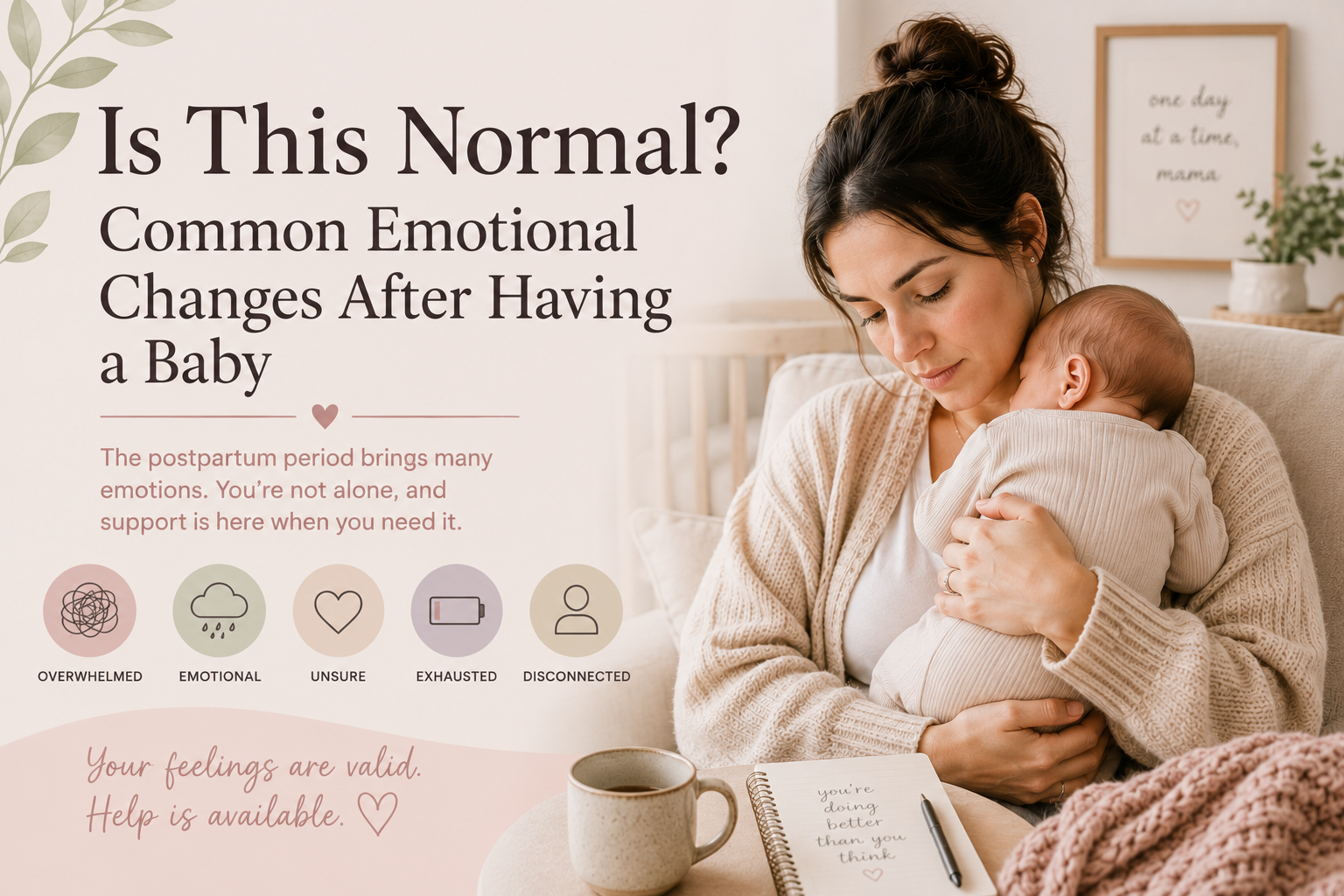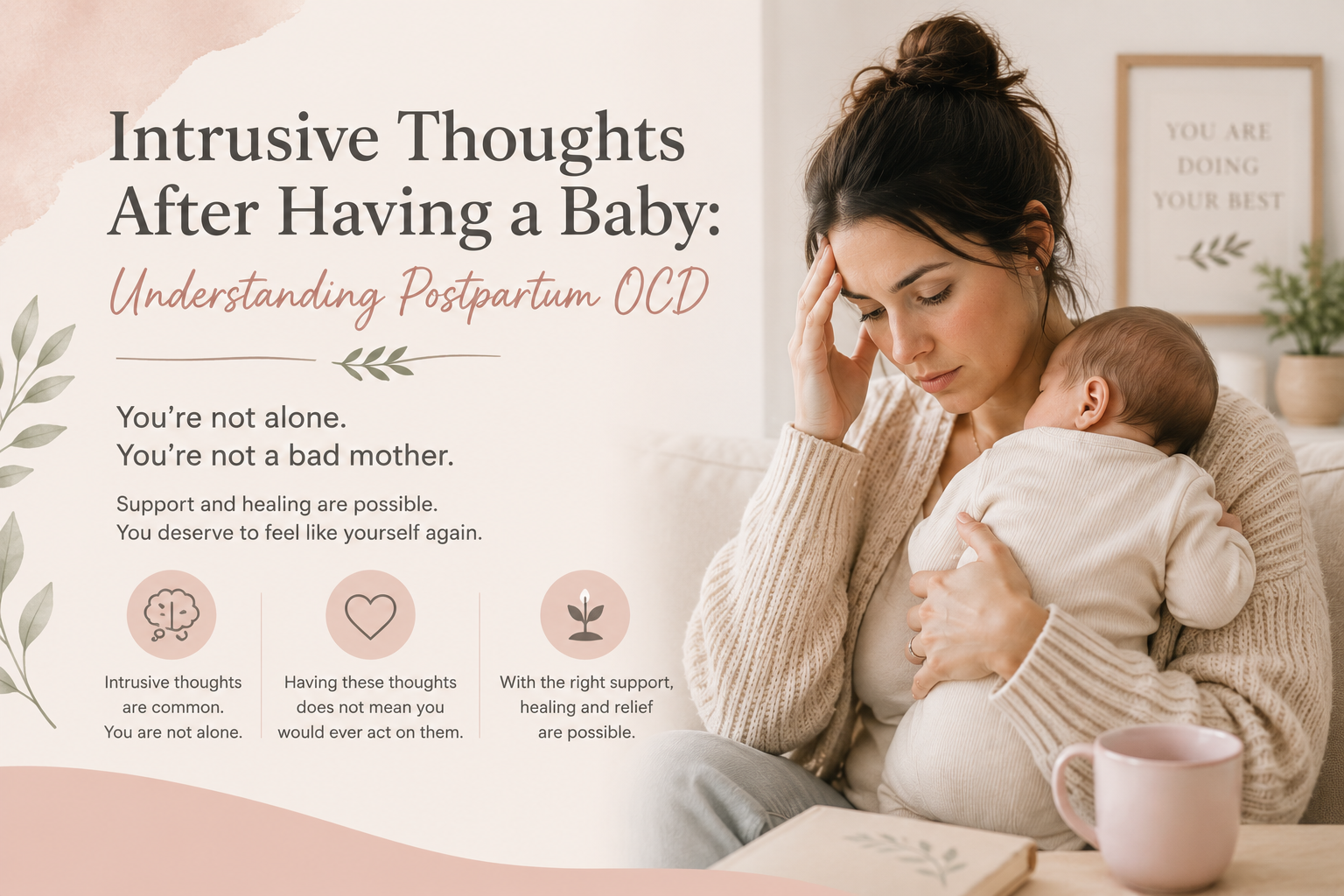
If you’ve experienced frightening or unwanted thoughts after having your baby, you’re not alone, and you’re not a bad mother.
Many new mothers are surprised by the thoughts that can appear after childbirth. These thoughts can be upsetting, confusing, and even frightening. Because they’re so difficult to talk about, many women suffer in silence, worried that someone might misunderstand what they’re experiencing.
The truth is that intrusive thoughts are far more common than most people realize. Having these thoughts does not mean you want them to happen or that you would ever act on them.
Understanding what’s happening can be the first step toward healing.
What Are Intrusive Thoughts?
Intrusive thoughts are unwanted thoughts, images, or mental “what if” scenarios that suddenly enter your mind.
For mothers experiencing postpartum OCD, these thoughts often center around accidental or intentional harm coming to their baby.
Examples might include:
- “What if I accidentally drop my baby?”
- “What if something terrible happens while they’re sleeping?”
- Disturbing mental images that seem to come out of nowhere.
- Repeated worries that you’re somehow not keeping your baby safe enough.
These thoughts can feel incredibly real and distressing, even though they’re completely unwanted.
You’re Not Alone
One of the hardest parts about postpartum OCD is the shame it creates.
Many mothers think:
- “What kind of mother has thoughts like this?”
- “What if someone thinks I’m dangerous?”
- “I can’t tell anyone.”
Because of these fears, many women never tell their partner, family, or healthcare provider what they’re experiencing.
But intrusive thoughts are actually very common during the postpartum period.
The fact that these thoughts upset you is often an important sign that they are unwanted and not a reflection of who you are.
What Is Postpartum OCD?
Postpartum Obsessive-Compulsive Disorder (OCD) is a type of anxiety disorder that can develop during pregnancy or after childbirth.
It typically includes:
- Distressing intrusive thoughts
- Constant fear that something bad will happen
- Repeated checking behaviors
- Seeking reassurance
- Avoiding situations that trigger anxiety
- Feeling responsible for preventing every possible danger
The goal of these behaviors is usually to reduce anxiety, but they often make the cycle stronger over time.
What Causes It?
Like many perinatal mental health conditions, postpartum OCD doesn’t have a single cause.
Several factors may contribute, including:
- Hormonal changes
- Sleep deprivation
- Increased responsibility
- Previous anxiety or OCD
- The enormous emotional adjustment of becoming a parent
It is not caused by being a bad mother or doing something wrong.
How Therapy Can Help
Therapy provides a safe, judgment-free place to talk openly about intrusive thoughts without fear of being misunderstood.
Together, we can:
- Understand why intrusive thoughts happen
- Reduce the fear surrounding them
- Learn healthy ways to respond to anxiety
- Break the cycle of obsessive thinking
- Build confidence and self-compassion
Many mothers feel an enormous sense of relief simply realizing they aren’t alone.
When Should You Reach Out?
Consider seeking support if:
- Intrusive thoughts are happening frequently.
- You’re avoiding caring for your baby because of fear.
- You spend large amounts of time checking or seeking reassurance.
- Anxiety feels overwhelming.
- Your thoughts are interfering with daily life.
You don’t have to continue living in fear.
Healing Is Possible
Postpartum OCD is highly treatable.
With the right support, you can learn to understand these thoughts, reduce their intensity, and stop letting them control your life.
You deserve to enjoy your baby without carrying constant fear and anxiety.
Recovery is possible, and you don’t have to navigate it alone.
You Deserve Support
If you’re experiencing intrusive thoughts or wondering whether what you’re feeling is normal, know that you’re not alone.
There is hope, healing, and compassionate support available.
Book your First Intake Appointment today and begin your healing journey in a safe, supportive space.