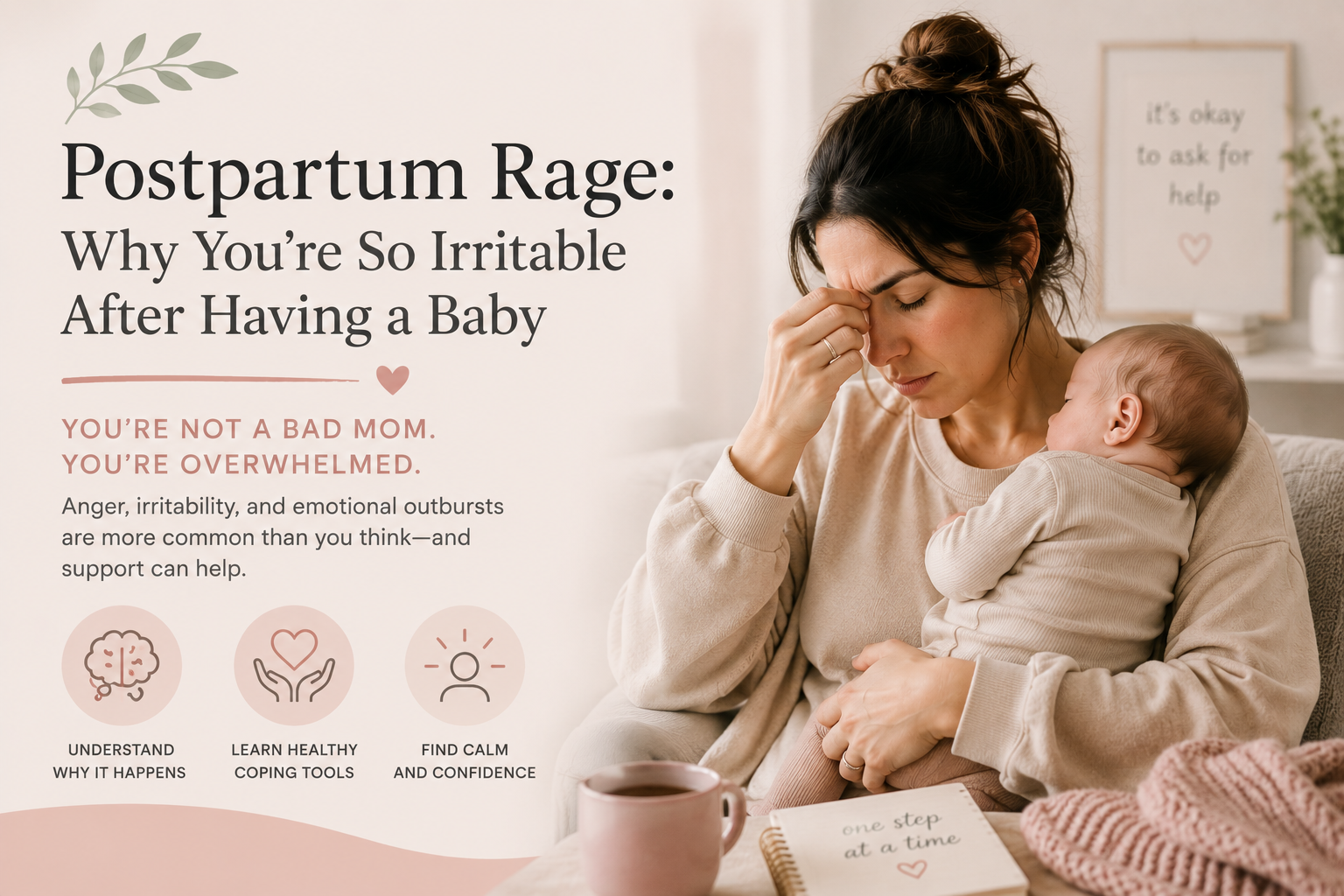
If you’ve found yourself snapping more easily, feeling constantly frustrated, or wondering, “Why am I so angry?” you’re not alone.
When people talk about postpartum mental health, they often focus on sadness or anxiety. But for many mothers, those emotions show up in a different way: anger.
You may feel impatient with your partner, overwhelmed by small inconveniences, or frustrated by things that never used to bother you. These emotions can leave you feeling guilty, confused, or wondering if you’re failing as a parent.
The truth is that postpartum rage is more common than many people realize, and it doesn’t make you a bad mother.
What Is Postpartum Rage?
Postpartum rage isn’t a separate mental health diagnosis. Instead, it’s a symptom that can accompany postpartum depression, postpartum anxiety, chronic stress, or emotional overwhelm.
For some mothers, anger becomes the emotion that surfaces most often.
You might notice:
- Feeling irritated over small things
- Snapping at your partner or loved ones
- Feeling constantly on edge
- Becoming frustrated quickly
- Wanting to be left alone
- Feeling guilty after angry outbursts
- Experiencing intense emotional reactions that seem out of proportion
These feelings can be frightening, especially if they don’t feel like your normal self.
Why Does It Happen?
Motherhood places enormous demands on both your body and mind.
Postpartum rage is often influenced by several factors, including:
- Hormonal changes after childbirth
- Sleep deprivation
- Constant mental and emotional demands
- Feeling touched out or overstimulated
- Pressure to “do everything”
- Anxiety or depression
- Limited support
When your nervous system is overwhelmed, even small challenges can feel impossible to manage.
You’re Not a Bad Mom
Many mothers feel ashamed after losing their patience.
You might think:
- “Good moms don’t get this angry.”
- “Why can’t I control my emotions?”
- “My family deserves better.”
The reality is that feeling overwhelmed doesn’t mean you’re failing.
It means your mind and body may be asking for support.
Motherhood is hard. You weren’t meant to carry everything alone.
How Therapy Can Help
Therapy offers a safe, compassionate place to understand what’s happening beneath the anger.
Together, we’ll explore:
- What’s contributing to your emotional overwhelm
- Healthy ways to cope with stress
- Practical tools for regulating difficult emotions
- Strategies for communicating your needs
- Ways to care for yourself without guilt
The goal isn’t to never feel angry. It’s to understand your emotions, respond to them in healthier ways, and feel more in control.
When Should You Reach Out?
It’s a good idea to seek support if:
- Anger feels frequent or overwhelming
- You’re yelling more than you’d like
- You feel guilty after emotional outbursts
- You’re constantly irritable or tense
- Your emotions are affecting your relationships or daily life
You don’t have to wait until you’re burned out to ask for help.
Healing Is Possible
With support, many mothers find they can better understand their emotions, reduce their stress, and reconnect with themselves.
You deserve to experience motherhood with more peace, patience, and self-compassion.
Healing isn’t about becoming a “perfect mom.” It’s about becoming a healthier, more supported version of yourself.
You Don’t Have to Carry It Alone
If postpartum rage or constant irritability feels familiar, know that you’re not alone.
Support is available, and healing is possible.
Book your First Intake Appointment today and take the first step toward feeling more like yourself again.