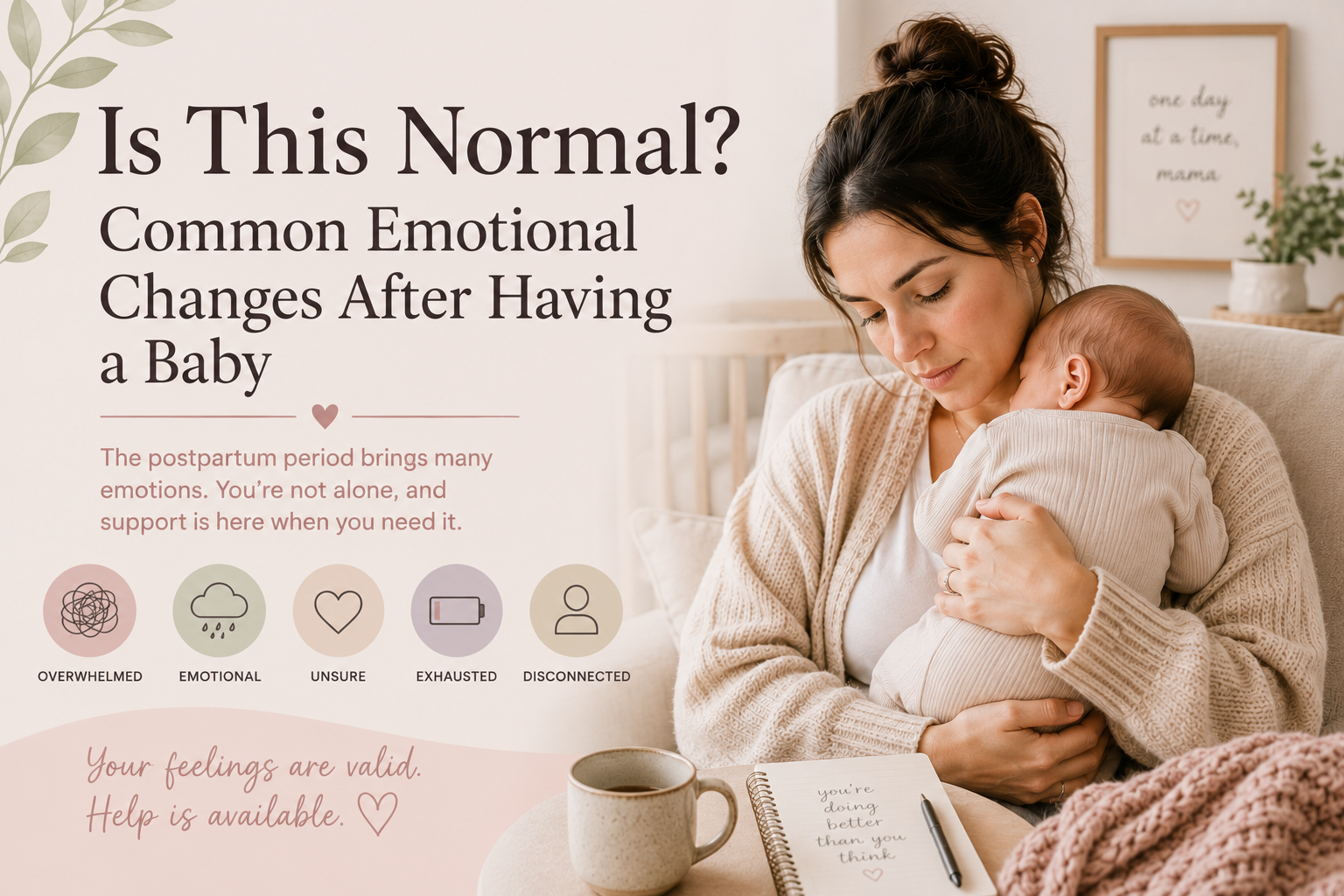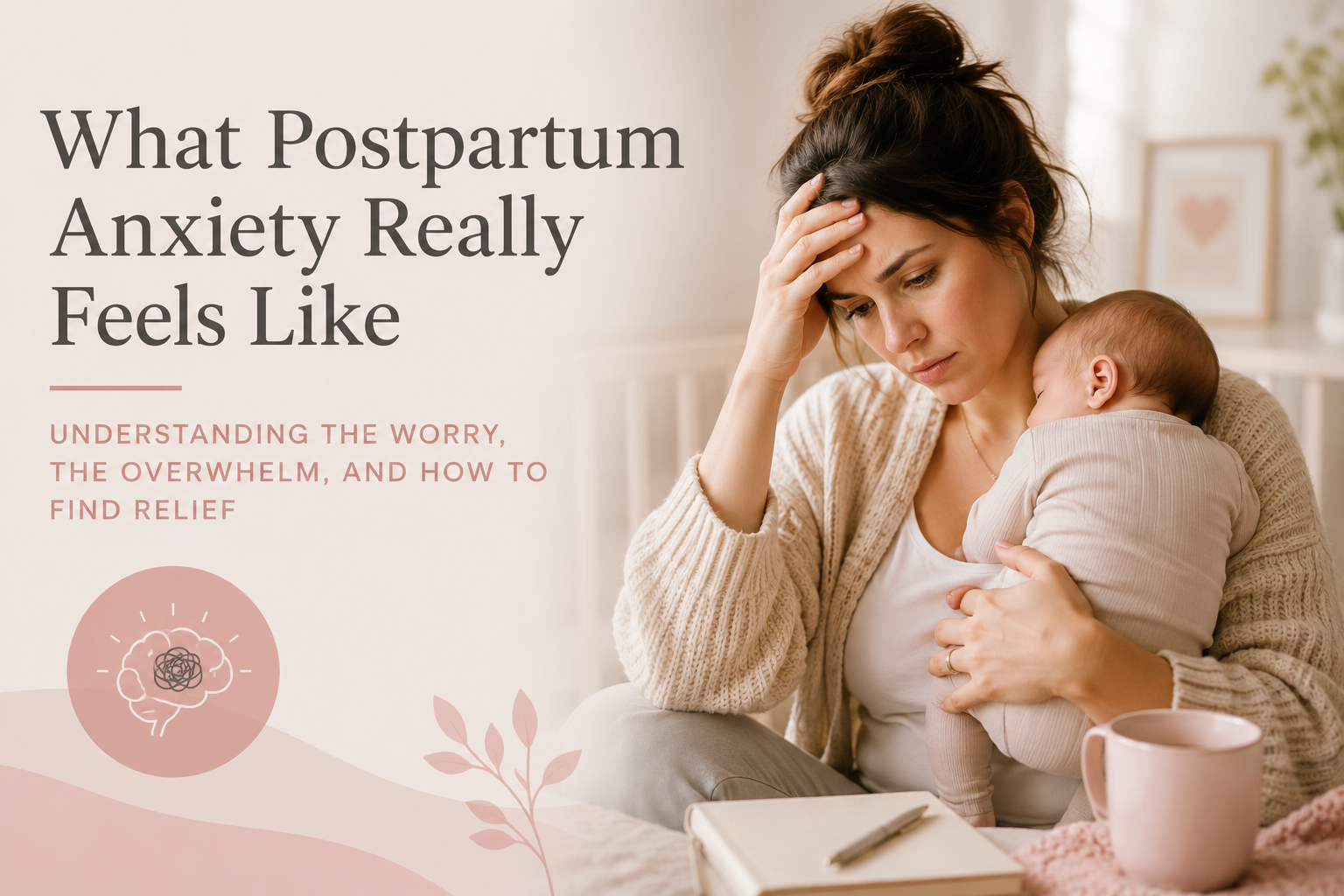
If your mind won’t slow down after having a baby, you’re not alone.
When most people think about postpartum mental health, they think of postpartum depression. But many new mothers experience something different: postpartum anxiety.
Instead of feeling sad, you may feel constantly worried, restless, or unable to relax. Your thoughts may race from one concern to the next, leaving you mentally exhausted even when everything appears to be fine.
If this sounds familiar, know that you’re not alone. Postpartum anxiety is common, treatable, and nothing to be ashamed of.
What Is Postpartum Anxiety?
Postpartum anxiety is characterized by excessive worry or fear during pregnancy or after the birth of a baby. While some level of concern is a normal part of becoming a parent, postpartum anxiety goes beyond typical new-parent worries.
The anxiety can feel relentless, making it difficult to enjoy your baby, sleep, or simply feel present in everyday life.
Common Symptoms
Every mother’s experience is different, but postpartum anxiety often includes:
- Constant worrying that feels impossible to control
- Racing “what if” thoughts
- Feeling like something bad is about to happen
- Trouble relaxing, even when your baby is asleep
- Frequently checking on your baby
- Difficulty sleeping despite being exhausted
- Feeling restless or on edge
- Increased irritability
- Difficulty concentrating
- Feeling overwhelmed by everyday decisions
Many moms describe feeling like their brain simply won’t “turn off.”
Why Does It Happen?
There isn’t one single cause of postpartum anxiety. Instead, it’s often the result of several factors coming together, including:
- Hormonal changes after childbirth
- Sleep deprivation
- Physical recovery
- The stress of caring for a newborn
- Major life and identity changes
- Previous anxiety or mental health concerns
- Limited support or increased life stress
Becoming a mother is one of life’s biggest transitions. It’s understandable that your mind and body may need extra support during this time.
You Don’t Have to “Just Push Through”
Many mothers tell themselves:
“I’m just being a worried mom.”
“Everyone feels this way.”
“I should be able to handle this.”
While some worry is completely normal, anxiety that begins affecting your daily life deserves attention.
You don’t have to wait until things become unbearable before asking for help.
How Therapy Can Help
Therapy provides a safe space to slow down and better understand what you’re experiencing.
Together, we’ll work to:
- Identify what’s fueling your anxiety
- Learn practical coping strategies
- Reduce racing thoughts
- Build confidence in yourself and your parenting
- Create healthier ways to manage stress
- Help you reconnect with moments of calm
The goal isn’t to eliminate every worry. It’s to help you feel more grounded, more present, and more like yourself again.
When Should You Reach Out?
Consider reaching out if your anxiety:
- Feels constant or overwhelming
- Interferes with sleep or daily life
- Makes it difficult to enjoy time with your baby
- Causes panic attacks or physical symptoms
- Leaves you feeling exhausted all the time
Seeking support isn’t a sign of weakness. It’s an act of caring for yourself and your family.
Healing Is Possible
Postpartum anxiety is highly treatable, and many mothers find significant relief through therapy and the right support.
You don’t have to carry the weight of constant worry on your own.
With compassion, practical tools, and a supportive space to talk, it’s possible to regain a sense of calm and confidence as you navigate motherhood.
You’re Not Alone
Whether you’re pregnant, newly postpartum, or months into your motherhood journey, support is available.
Book your First Intake Appointment today and take the first step toward feeling more like yourself again.