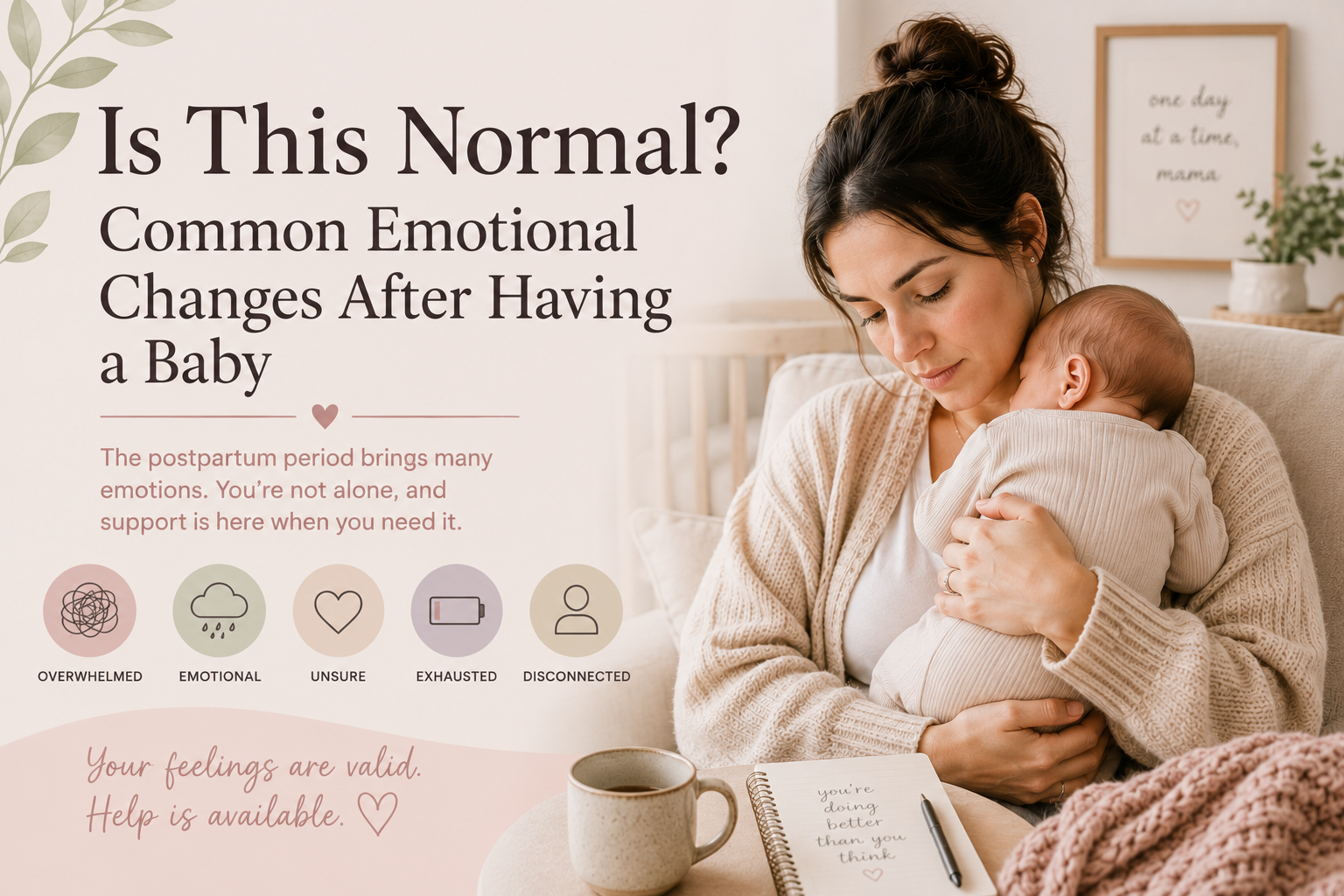
Bringing a new baby home can be one of the happiest moments of your life, but it can also bring unexpected emotions. Many new mothers are surprised by how emotional they feel during the first days and weeks after giving birth. If you’ve found yourself crying more easily, feeling overwhelmed, or wondering if what you’re experiencing is normal, you’re not alone.
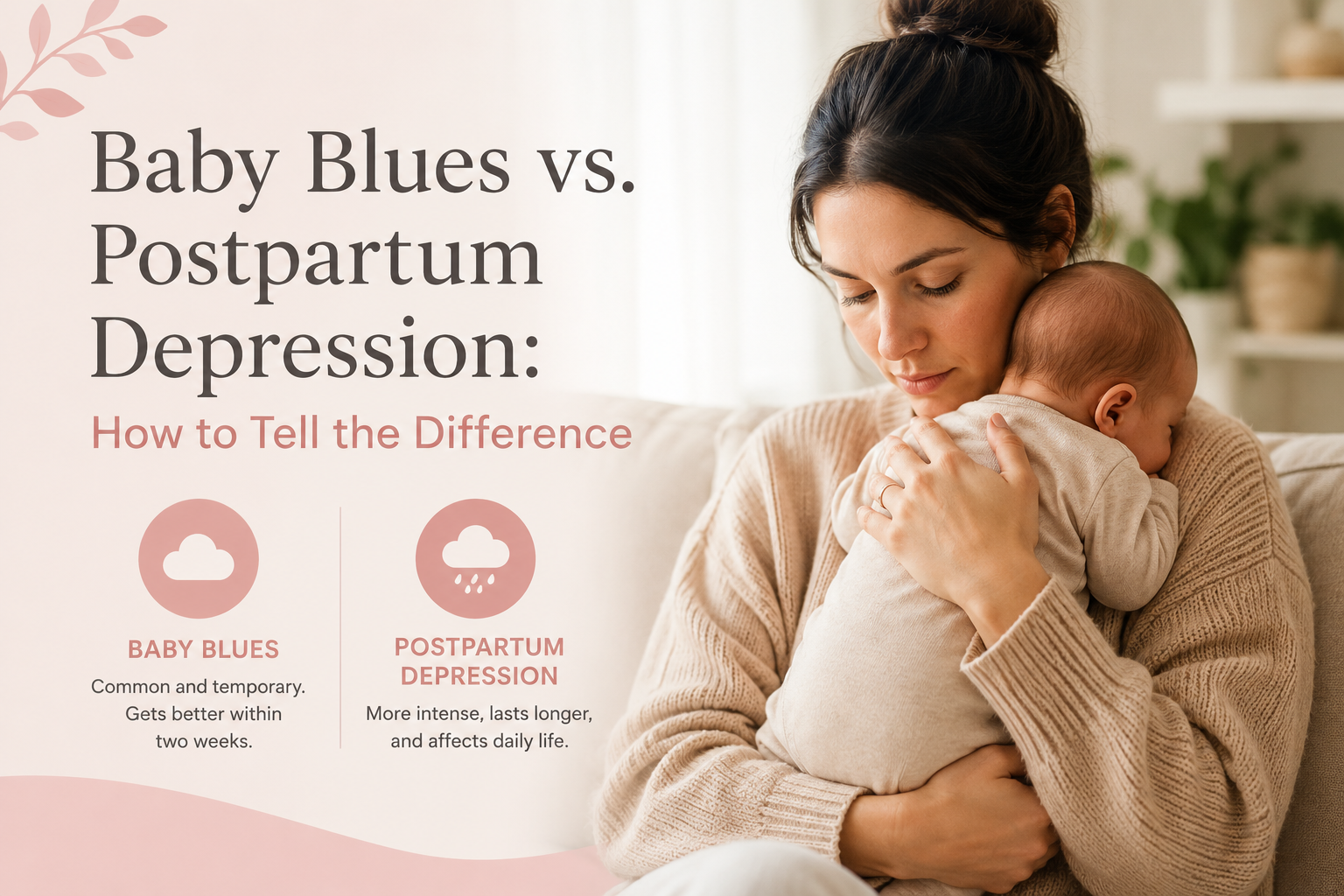
Understanding the difference between the baby blues and postpartum depression can help you recognize when additional support may be helpful.
What Are the Baby Blues?
Up to 80% of new mothers experience the baby blues after giving birth. These feelings are caused by a combination of hormonal changes, lack of sleep, physical recovery, and the major life adjustment that comes with becoming a parent.
Common symptoms include:
- Tearfulness
- Mood swings
- Feeling overwhelmed
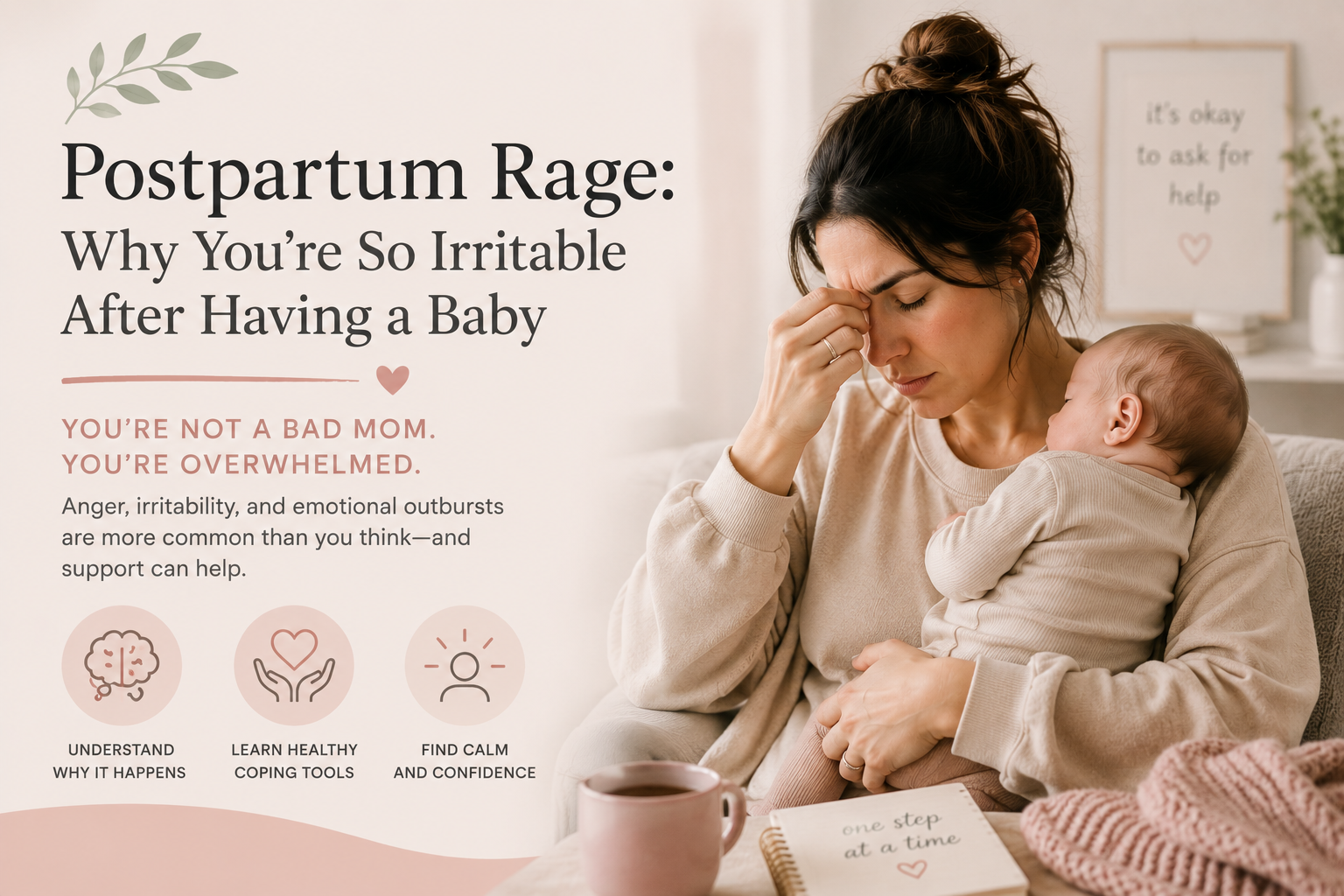
- Irritability
- Anxiety
- Difficulty concentrating
The baby blues usually begin within the first few days after delivery and improve on their own within about two weeks.
Although they can feel intense, they are considered a normal part of postpartum recovery.
What Is Postpartum Depression?
Postpartum depression is more than simply feeling emotional after having a baby.
Symptoms are often more severe, last longer than two weeks, and begin interfering with your ability to care for yourself, your baby, or enjoy daily life.
You may notice:
- Persistent sadness
- Feeling hopeless
- Losing interest in activities you once enjoyed
- Feeling disconnected from your baby
- Difficulty bonding
- Changes in appetite
- Difficulty sleeping, even when your baby is asleep
- Feelings of guilt or worthlessness
Postpartum depression is a medical condition, not a sign that you’re doing anything wrong.
When Should You Reach Out?
If your symptoms:
- Last longer than two weeks
- Continue getting worse
- Make daily life feel overwhelming
- Affect your ability to care for yourself or your baby
it’s time to seek support.
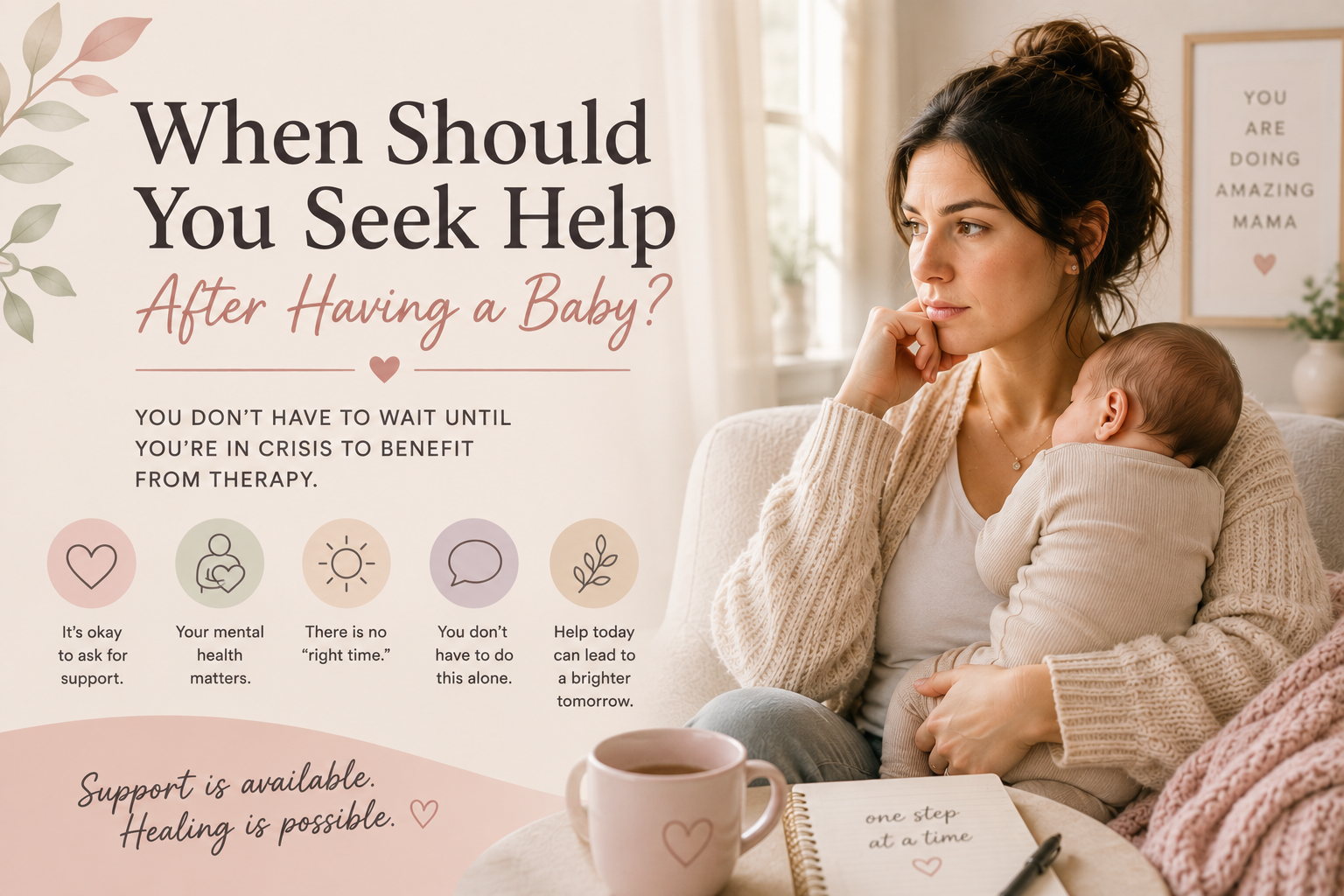
You don’t have to wait until you’re in crisis.
Healing Is Possible
Postpartum depression is highly treatable. With the right support, many mothers recover and begin feeling like themselves again.
Therapy provides a safe, compassionate space to process what you’re experiencing, develop healthy coping skills, and move toward healing.
You Don’t Have to Go Through This Alone
If you’re struggling with postpartum depression or wondering whether what you’re experiencing is normal, support is available.
Book your First Intake Appointment today and take the first step toward healing.